
A relatively slow performance by the industrial sector and a high base effect may slow down gross domestic product (GDP) growth in the second quarter (July-September) of fiscal 2007-08 to below 9 per cent, feel analysts.
There is no doubt the oil companies are bleeding, but the issue is whether the government should also reduce the extra taxes it gets from high oil prices.

A monsoon deficit is likely to affect the agriculture output, which could have an impact on the food inflation

Following the money and freezing anything unaccounted is the only way to set an example for others, suggests Debashis Basu.

CRISIL chief economist D K Joshi is of the opinion that GDP is an indicator of the health of the economy.
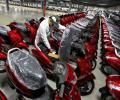
Retail sales of cars are back to January 2018 levels in August 2021. Two-wheeler retail sales are 22 per cent lower, nearly four years down the line.

Since March 2020, WPI food inflation rate continued to fall but the CPI-food inflation rose, signaling a breakdown in supply chain from the mandis to the final household.

Direct economic stimulus measures such as tax cuts for individuals and industry would have helped to prop up the Indian economy which was hit hard by the lockdowns across several states in India, say economists and corporate leaders. While the measures announced on Monday are focussed more on the supply side, these steps would take a lot of time to move the needle for the economy.

Ninety-nine companies, which also include some unlisted ones, have more than Rs 100 crore each of minimum alternate tax credit on their books, cumulatively adding up to Rs 75,000 crore. By utilising MAT credit, many companies will be able to bring down their effective tax cost.

Revenue from divestment has fetched Rs 40,000-50,000 crore against target of Rs 2.10 trillion.

Indian economy is likely to rebound with an 8.9 per cent growth in the fiscal year beginning April 2021 after economic activity showed significant improvement in the last quarter, IHS Markit said on Friday. The National Statistical Organisation (NSO) on Thursday predicted that the economy will contract 7.7 per cent in the current financial year ending in March, the worst performance in four decades.

The rupee's plunging to record level and a sharp fall in the equity market are knee-jerk investor reactions to the US Federal Reserve's saying the it will slow down bond-buying programme in view of improving American economy.

In the manufacturing sector, output is expected to decline by about 70 per cent as only food-processing, and drugs and pharma industries are allowed to operate while other segments, such as engineering and metals, have shut operations.

Crops including fruit, vegetables account for 60% of GDP in agriculture, forestry, fishing sector.

A pick-up in farmer income could have a cascading impact on the rural economy, though agriculture is becoming a smaller part of India's overall rural incomes.
Experts said the higher pay out will boost consumption demand.
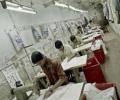
The MSME sector, which is employment-intensive, accounts for 45 per cent of the country's manufacturing, 40 per cent of exports and nearly 8 per cent of gross domestic product.

Overall, small savings have amassed Rs 1.17 trillion from April-September - 26 per cent more than the previous year. But in those six months, the economy lost 24 per cent in the first three months, and is slated to lose 10 per cent in the second quarter.

Analysts on Wednesday welcomed the Reserve Bank's decision to grant bank licences to Bandhan and IDFC, but expressed dismay that only two of the over two dozen aspirants made the cut.

Unless supported by investment, any spark of a recovery could be temporary, hint economists.

Prime Minister's key economic advisor C Rangarajan on Friday lowered the growth forecast for the current fiscal to 5.3 per cent from 6.4 per cent projected earlier and listed out host of measures including further liberalisation of foreign direct investment norms to improve economic condition.

What stocks will gain from a normal monsoon?

The GDP slumped to a three-year low lagging China for the second straight quarter -- as manufacturing slowed ahead of the GST launch amid demonetisation effect.

The RBI governor's assurance should give investors enough confidence to start believing in the NBFC sector again, say bankers.
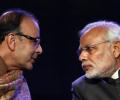
PM's announcement were focused on those most affected by the note ban.

Officials in the weather department said the monsoon is expected to be below normal because of the El-Nino effect.
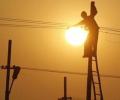
Power generation and distribution is the most indebted sector

The growth in eight infrastructure industries slowed to 2.3 per cent in May mainly due to contraction in crude oil, natural gas, coal and fertilizer output.
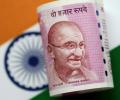
Demonetisation is the biggest reason for the rise in preference for small savings.

Technically, the Indian economy is on road to recovery.
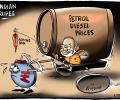
Retail inflation inches up to 3.77%; IIP growth dips to 3-month low

Home Minister Rajnath Singh said that the decision could cost the government roughly Rs 15,000 crore.

The Consumer Price Index hit the lowest in six months in March at 4.83 per cent.
Eight infrastructure industries have posted a growth rate of 8 per cent for September on account of good performance by crude oil, steel and electricity sectors.

There is a narrow chance that the central bank may cut rates in the future, according to a poll of 15 economists and treasurers.

This was the near-unanimous replies of 10 market participants.

IDS-2 and raids to uncover black money stash keep receipts flowing

Union Budget had projected the fiscal deficit at Rs 5.56 lakh crore.
